The Craft of Creating a Spark Stories Book: From First Question to Front Door
A parent wrote to us recently with a very simple question. "How do you actually make these books?" It was a fair question, and one we love to answer, because the journey from a few details on a screen to a finished hardcover on a nightstand is more intentional than most people imagine.
This is the full story. The personalization, the writing, the design, the printing, the packaging. No marketing gloss, just the steps a book goes through before it lands in your hands.
It begins with you, not us
Every Spark Stories book starts the same way: someone tells us about a person they love. A child's name and age. A grandparent's favorite memory. The way a couple first met. The traits of a baby who has just arrived in the world.
This part is often the most emotional, and we have learned to keep it light and easy. The questions we ask are short. The choices are visual. The whole creation flow is designed to feel less like filling out a form and more like sitting down to plan a small gift for someone you adore.
Whatever you share with us becomes the seed of the book. Names appear in the text. Traits shape the character. Small personal details, the love of dinosaurs, a beach holiday, a favorite stuffed animal, find their way into the story so that the book feels written for one specific person.
Writing with emotion in mind
The stories themselves are built around feelings before plots. We start by asking what a particular kind of book should feel like at bedtime. Comfort. Adventure. Wonder. A quiet hug at the end of a long day. Once the emotional shape is clear, the narrative arc follows: a beginning that pulls you in, a middle that brings a small challenge, an ending that leaves the reader settled and loved.
We write in the second person whenever it makes sense, so the protagonist is right at the center of every scene. We keep sentences short enough for a tired parent to read aloud without losing breath, and rhythmic enough that a child wants to hear them again.
For adult-focused books, the tone shifts. A book celebrating a couple has a different cadence than one written for a five-year-old. A book made for grandparents leans into memory and warmth. Same hands, same care, very different voices.
Designing each page around the protagonist
With the story shape in place, the visual side of the book begins. Our books are square format, 8.5 by 8.5 inches, which gives the artwork room to breathe and works beautifully for both children's hands and adult shelves.
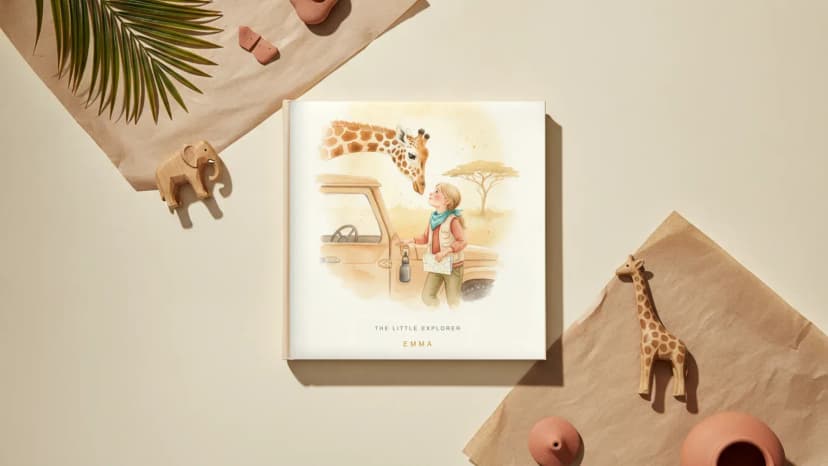
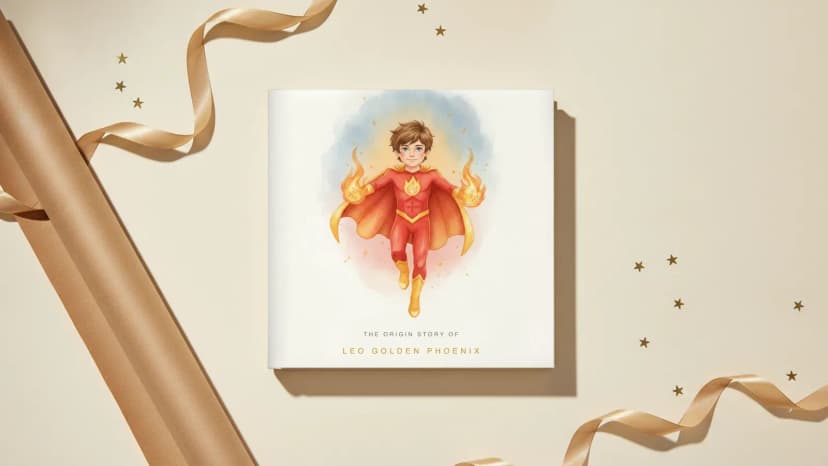
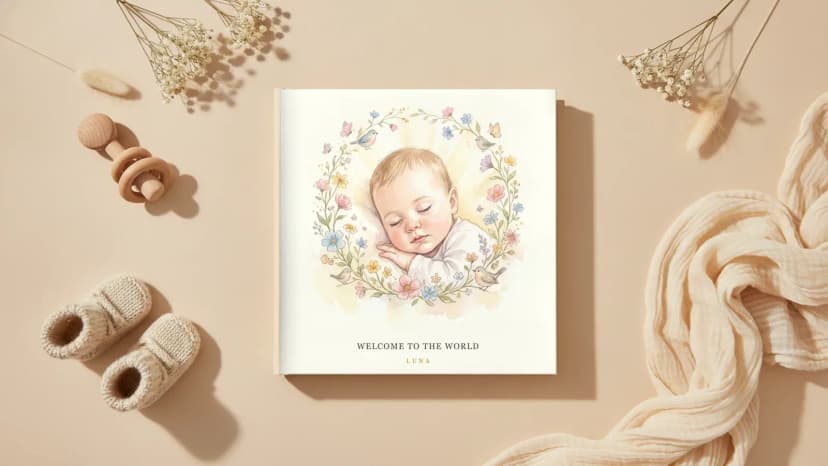
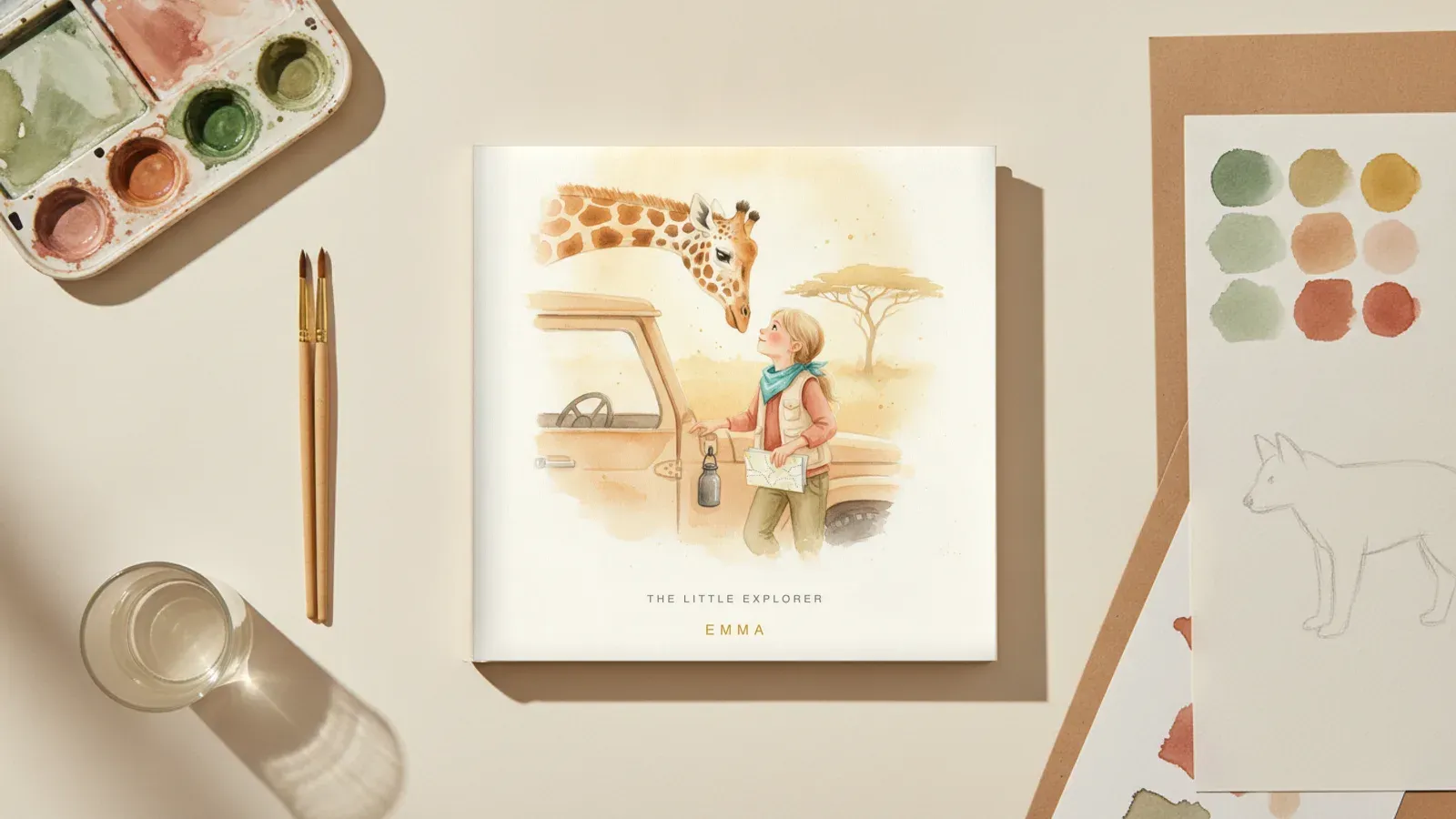
The protagonist sits at the heart of every spread. We use a watercolor style with soft, warm tones because it carries the kind of gentle, handmade quality that suits a keepsake. Hair, skin, eyes, expressions, all of it is shaped to match the person the book is made for. The character is recognizable but stylized, more like a portrait than a photograph.
Names are designed into the scenes rather than dropped on top of them. A name carved into a tree. A name on a banner. A name in the stars. Each layout is built so that finding the name on the page feels like a small, satisfying surprise.
We pay particular attention to the small details: a single bird that recurs across pages, a recurring flower, a tiny star tucked into corners. Those details reward re-reading and give children a reason to come back to the book again and again.
A careful review before anything is printed
Once the book is composed, every spread goes through a careful review. We look for the things that matter most: is the name spelled correctly on every page, does the character look consistent from beginning to end, does the color feel right, does the layout feel balanced. If anything looks off, the page is reworked before the book ever leaves the design stage.
No Spark Stories book is printed in advance. Each one is printed only after you have placed the order, which means the book on its way to you is the only one of its kind in the world. That single fact changes a lot of small decisions about how we work, and it is part of what makes the final object feel personal.
Printed on FSC paper, printed only when ordered
When the book is ready, the file goes to our print partner, who produces it on demand. No warehouses full of unsold copies. No stacks of books waiting to be pulped. Each book is printed because someone asked for it, and only then.
We print on FSC-certified paper, which means the paper comes from forests managed responsibly. Trees are replanted. Biodiversity is protected. The supply chain is traceable. We think of FSC certification as the floor, not the ceiling.
We offer two physical formats. Softcover is a perfect-bound paperback, light enough to slip into a bag and tough enough for daily reading. Hardcover is a case-bound edition that feels heavier in the hand and reads like a proper keepsake. The colors on our pages come out rich and saturated, which is what you want for watercolor illustrations. Skin tones look healthy, skies look luminous, and the tiny details we hide across the pages stay sharp and crisp.
Packed with care, sent to your door
A book this personal deserves an arrival to match. Hardcover editions ship in protective packaging that keeps the cover clean during the journey. Softcover editions go out in rigid mailers that prevent bending in transit.
All of our packaging is recyclable. No single-use plastic bubble wrap. No styrofoam. The materials we use to protect the book on the way are the same kinds of materials you can drop in your paper recycling once the book is in your home.
Delivery times depend on where you live. Production takes 3 to 5 business days, and your book arrives within 5 to 12 business days of your order. We would rather take a few extra days and get it right than cut corners to shave a day off the timeline.
What it feels like when it arrives
The part we cannot control, and would not want to, is the moment the book is opened for the first time. A small face lighting up at the sight of a familiar name on the cover. A grandparent recognizing a memory turned into a story. A couple finding their first meeting illustrated on a page.
That is the moment the whole process is built around. Every choice we make about words, illustrations, paper and packaging is in service of those few seconds when someone realizes the book is for them, and only them.
A few honest notes
We try to be transparent about what we do well and where we still have work to do.
Very long names sometimes need a bit of layout adjustment so they stay balanced on the page. We handle this carefully but it can mean a small extra review.
Identical twins are a special case. We recommend creating two separate books with slightly different traits, so that each child gets a story that is fully their own.
We keep refining the craft. The books we make today look noticeably different from the earliest versions, and next year they will be better still. That ongoing care is part of why a Spark Stories book stays on the shelf rather than ending up in a donation pile.
Make one for someone you love
The best way to understand how the whole craft comes together is to start a book of your own. Begin in our creation flow and you can preview the story and the artwork before you order, with no commitment until you are sure the book feels right.