Behind the Illustrations: How We Design Each Book to Feel Personal
When parents open a Spark Stories book for the first time, the thing they usually notice before the words is the artwork. The soft watercolor textures. The way the light falls on a child's cheek. The little details tucked into the corners of a page that you only spot on the third or fourth read.
Those details are not accidents. They are the result of dozens of small decisions about palette, mood, composition and feeling. Below is a look at how we approach the illustration side of every book we craft, and why it ends up looking the way it does.
We start with the feeling, not the drawing
Before any line is sketched, we ask a different question: what should this page feel like? Wonder. Safety. Excitement. A quiet evening at the end of an adventure. Once the emotion is clear, everything else follows naturally: the colors, the composition, the amount of empty space we leave around the protagonist.
This emotion-first approach is what makes our books feel different from a generic picture book. There is an intention behind every page that you can sense even if you cannot put it into words.
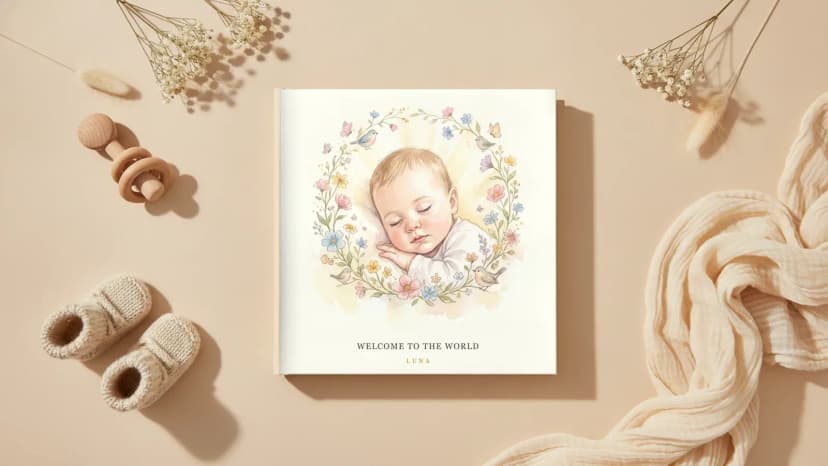
It is also the reason a story made for a newborn looks calm and warm, while one made for a curious five-year-old feels brighter and more playful. Same hands, same visual language, two completely different moods.
Why we chose watercolor as our signature style
There are dozens of ways to illustrate a children's book. We chose watercolor as the heart of our visual identity, and that choice is deliberate.
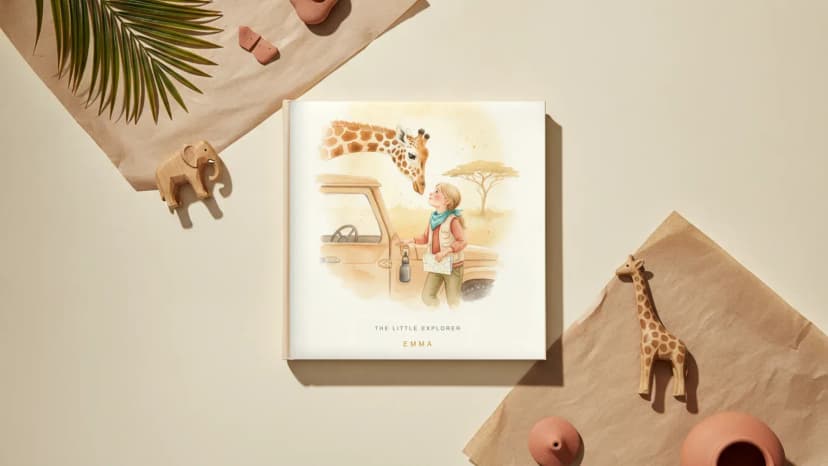
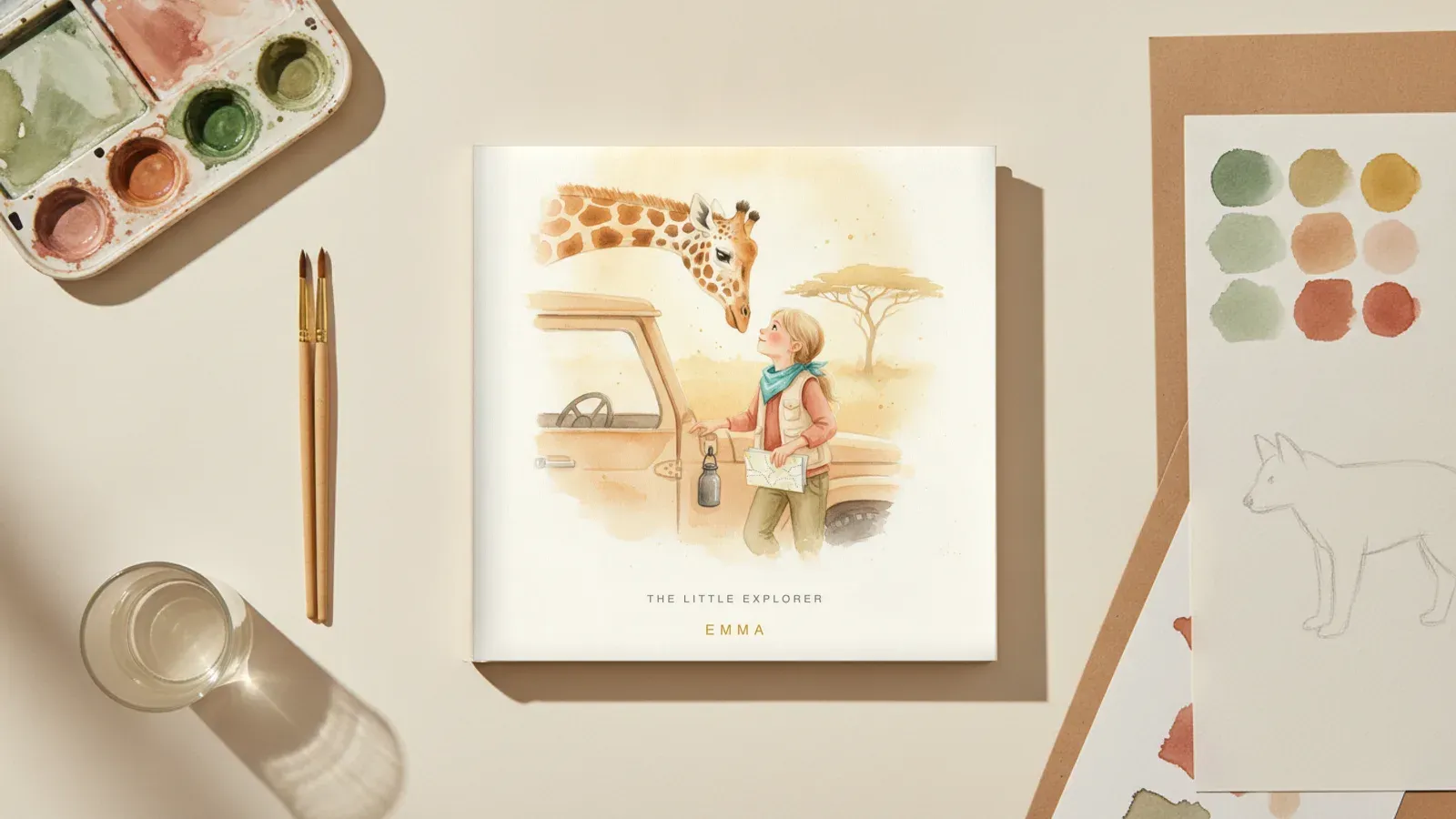
Watercolor has a softness that reads as gentle rather than loud. It carries a slightly handmade quality, the kind of texture you find in a beloved old picture book pulled off a grandparent's shelf. The colors bleed into each other in ways a screen alone never quite manages, and that imperfection is exactly what gives each illustration warmth.
Our palette leans toward muted, dreamy tones. Soft creams, warm pinks, gentle blues, dusty greens. Nothing electric. Nothing harsh. The idea is that the page should feel inviting at bedtime, when the room is dim and the only light comes from a small bedside lamp.
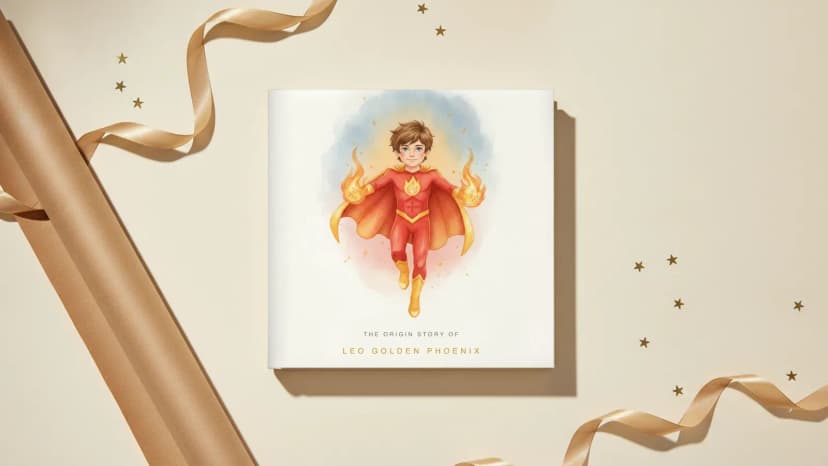
For families who want something more vibrant, the same watercolor base can shift toward brighter, more playful color combinations. The signature stays consistent, even as the story changes.
Making the protagonist feel like the protagonist
The character at the center of a Spark Stories book is the whole point. A child, a couple, a grandparent, sometimes a whole family. Whoever the book is made for, that person needs to feel like the story belongs to them from the very first page.
We spend a lot of time on the small things that make a character recognizable. The shape of the hair. The way the eyes catch the light. A small expression in the corner of the mouth. None of these details are large on their own, but together they are what makes a parent say, "That looks like her."
For each book, we work from the traits you share with us during the creation flow. Skin tone. Hair color and style. Eye color. Sometimes a small detail like a pair of glasses or a favorite outfit. The illustration translates those traits into the watercolor style of the book, so the protagonist is recognizable but stylized. It feels like art, not a filter pasted on top of a photo.
How the name finds its place on the page
A personalized name only feels right when it looks like it always belonged there. A name pasted across the top of a page is a giveaway. A name woven into the scene is a quiet kind of magic.
We design every page with a place for the name in mind. A banner fluttering from a castle tower. Letters carved into an old tree. A constellation in the sky. Footprints in the sand. The goal is always the same: when a child or a loved one finds their name on the page, it should feel like a small surprise that was waiting for them all along.
For short names, this is fairly easy. For long names, or names with accents, it takes a bit more care to keep the layout balanced. We would rather adjust a layout than crop a name.
The small details we hide on every page
If you look closely at a Spark Stories book, you will notice the same tiny element appearing across the pages. A small star. A little bird. A single flower in unexpected places. These hidden details are intentional.
They reward re-reading. A four-year-old who knows the story by heart will still find a reason to come back if there is something new to spot on every page. "Mom, did you see the bird?" is one of our favorite sentences to hear, because it means the book has earned a place in the bedtime rotation.
These details also help create a sense of continuity across the story. Even when scenes change, the small recurring elements remind the reader that they are inside one cohesive world.
Color, light, and how a page feels
Color is one of the most powerful tools we have. A bedtime scene leans into deep blues, soft purples and the warm amber of a single lamp. An adventure scene opens up into greens, oranges and a sky that almost glows. The same character can travel through both moods, and the color does most of the emotional work.
We pay particular attention to skin tones, because nothing breaks the spell faster than a portrait that does not feel right. Even small shifts in color can make a character look unwell or unfamiliar. We test our palettes carefully so that every skin tone in our range, from very fair to deep brown, looks healthy, warm and full of life on the page.
Why we keep evolving the visual style
Illustration is never finished. Every season we look back at the books we have crafted and ask what could be softer, what could be brighter, what felt right and what felt slightly off. Small adjustments compound over time, and the books we make today are visibly more refined than the earliest versions.
That ongoing care is part of why people keep their Spark Stories book on the shelf rather than in a box. It is meant to be a keepsake. A small object you come back to, that holds up to being read a hundred times.
See the style for yourself
The best way to understand how the illustrations come together is to see one made for someone you love. Start a book in our creation flow and you can preview the style before you order. Pick a face, pick a name, pick a moment, and watch the page take shape with the same care we put into every Spark Stories book.